

Tooth Gems 101: Common Questions
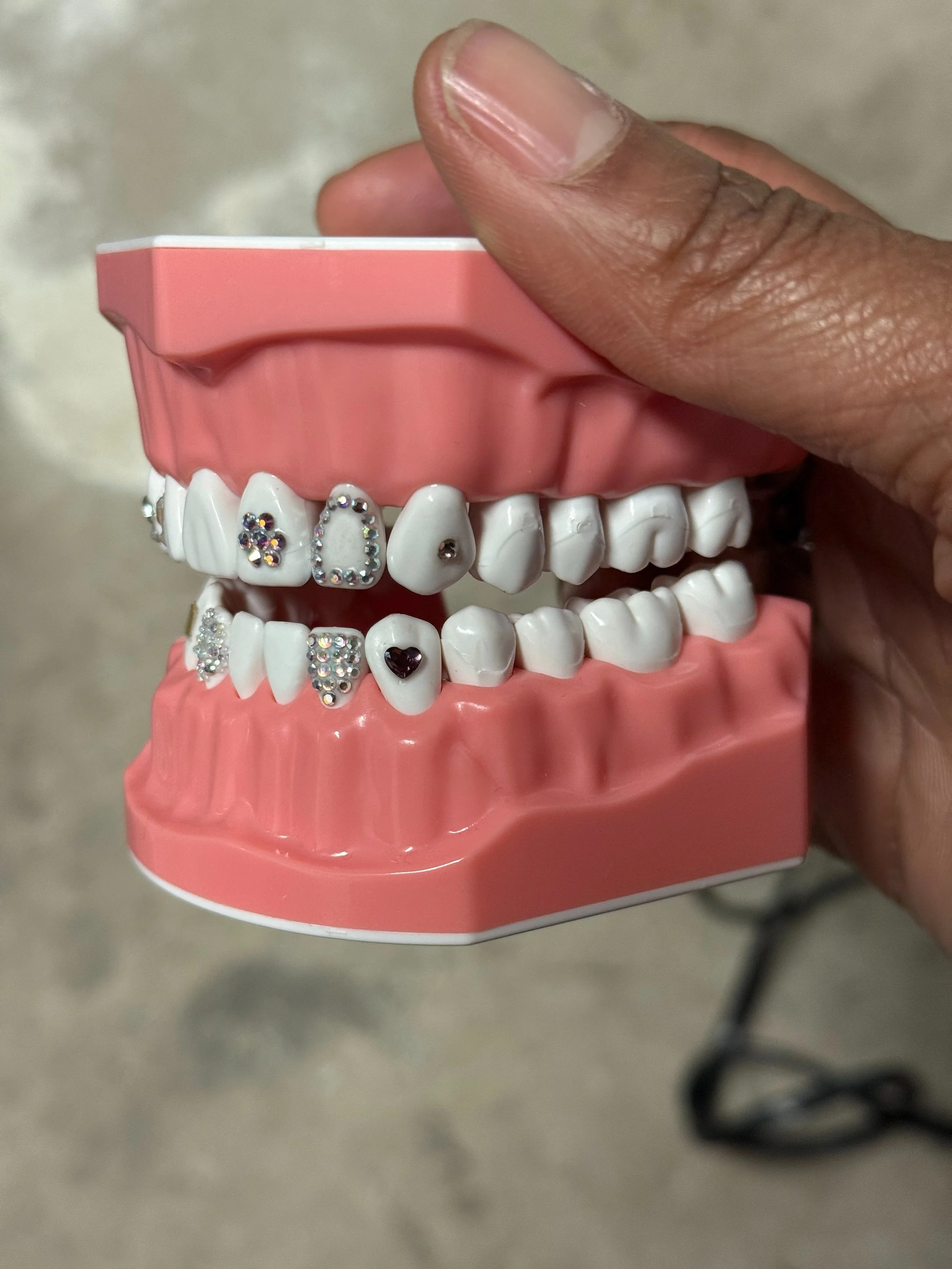
Example Tooth Gem Desings
Tooth gems are one of those things people think they understand… until they’re about to book. If you’re curious, nervous, excited, or just trying to figure out what’s real vs. internet rumors, this guide breaks it down.
What are tooth gems?
Tooth gems are small decorative crystals or charms that are bonded to the surface of a tooth using a technique similar to how dental brackets are attached. They sit on top of the enamel—no drilling should be needed for a standard tooth gem application.
Do tooth gems hurt?
A properly applied tooth gem shouldn’t hurt during placement or while wearing it. You might feel a little “new” sensation because there’s something on your tooth, but pain isn’t normal. If something feels sharp, irritating, or uncomfortable after your appointment, reach out to your artist right away.
Do you drill into the tooth?
For most tooth gem applications: no. The gem is bonded to the enamel surface. If anyone suggests drilling for a standard gem application, ask questions and make sure you understand exactly why they’re recommending it.
How long do tooth gems last?
Longevity depends on:
your bite (top vs bottom placement)
your oral habits (teeth grinding, nail biting, chewing ice)
aftercare (first 24–48 hours matter a lot)
the type/size of gem or charm
how well the tooth was prepped before bonding
Many clients get weeks to months, and some get longer with great aftercare and ideal placement. No artist can guarantee an exact timeframe because everyone’s mouth is different—placement and habits make a big difference.
Will tooth gems damage my enamel?
When applied and removed correctly, tooth gems are designed to be enamel-safe. The biggest risks usually come from:
improper application (poor prep, wrong adhesive use)
picking at it or trying to remove it yourself
removal done the wrong way
If you ever want it off, the safest move is having a dentist remove it (or a trained professional who follows enamel-safe removal practices).
Can I remove a tooth gem myself?
It’s not recommended. People usually damage enamel when they try to pry it off. If you’re ready for removal, book a professional removal or see your dentist.
Are tooth gems safe?
In general, tooth gems can be safe when:
you have healthy teeth and gums
the tooth is properly cleaned and prepped
quality materials are used
placement avoids high-bite contact areas
To show up safely, it’s best to arrive with brushed teeth and avoid booking if you have active cavities, swelling, gum irritation, or severe sensitivity—those should be addressed first.
Can I eat normally after getting tooth gems?
Yes—with a few precautions, especially at the beginning. For the first day or two, avoid:
sticky foods (taffy, caramel)
super hard foods (ice, hard candy)
chewing directly on the gem if possible
After that, most people return to normal eating, but avoiding hard chewing on the gem can extend wear time.
Can I brush my teeth like normal?
Yes. It’s important to keep brushing and flossing. Tips:
brush gently around the gem (don’t “scrub” aggressively)
use a soft toothbrush head
consider an alcohol-free mouthwash if you’re sensitive
Do tooth gems fall off?
They can, especially if they’re placed on a high-contact tooth or if someone grinds their teeth, bites pens, chews ice, or eats lots of sticky foods. If it pops off, save it if you can, and contact your artist—sometimes it can be reattached depending on the situation.
Who should NOT get tooth gems?
Tooth gems might not be a good idea (or may need extra planning) if you:
have active cavities or gum disease
have braces or dental appliances (sometimes it’s okay—placement matters)
grind your teeth heavily without a guard
have extreme tooth sensitivity
have veneers/crowns in the area (bonding can be different on restorations)
If you’re not sure, a quick consultation and a photo of your teeth can help determine the best placement.
Can you put a tooth gem on a crown, veneer, or filling?
Sometimes—bonding to natural enamel is usually the easiest and most predictable. Crowns and veneers may require different prep and materials, and results can vary. A consultation is best so placement and expectations are clear.
What’s the difference between a crystal gem and a gold charm?
Crystal gems are smaller, lighter, and tend to be easier to place on more tooth surfaces.
Gold charms are usually larger/heavier, and placement needs to avoid bite pressure more carefully.
Both can be beautiful—your bite and tooth shape usually decide what will last best.
Can I get multiple gems or a custom design?
Absolutely. Popular options include:
single gem (classic and subtle)
two-gem “double sparkle”
clusters (2–6 gems)
themed sets (stars, hearts, “windows,” disco ball looks)
custom freestyle designs (you bring inspo or we design together)
Custom designs typically take a bit longer and may require a consultation.
What should I do before my appointment?
Best prep:
brush and floss before you come
avoid oily foods right before (not a deal breaker, just helpful)
don’t use whitening strips immediately before your appointment
if you’re planning whitening, do it before gems (whitening won’t work under/around the same way once a gem is on)
How do I care for my tooth gem after?
Quick aftercare rules:
avoid sticky/hard foods for 24–48 hours
don’t pick at the gem
brush gently, keep flossing
if you grind your teeth, consider a night guard
if something feels off, reach out sooner rather than later
Final thoughts
Tooth gems are a fun, confidence-boosting detail—when done with good materials, good technique, and good placement. If you’re considering one, the best thing you can do is book with someone who prioritizes clean prep, enamel-safe practices, and shows you realistic placement options for your bite.